
Vol. 9 [UT Member Interview]🎤Richard A. Pennington (HIS '76)

![Vol. 9 [UT Member Interview]🎤Richard A. Pennington (HIS '76)](https://storage.ghost.io/c/a7/08/a708b603-4a62-49ea-8e9c-9e0198ae20e6/content/images/size/w2000/2026/06/Minimal-Editorial-Interview-Feature--13-.jpg)
This time, we feature an interview with Richard A. Pennington (HIS ’76), a Texas native who has lived in Korea for many years.
🎤 As a native Texan, what part of Texas still feels most like home to you?
I was born and raised in Dallas and spent 30 years in Austin along with some time in Denton and Nacogdoches, as well as Kentucky, North Carolina and Michigan. None would be home to me today.
In my 18 ½ years in Korea, I have been asked numerous times, “Don’t you feel homesick?” The answer is invariably “Not really. That was then, this is now” (to borrow a line from a David Bowie song). I admit that I have a deep longing for Mexican food, the authentic version of which is hard to find here. Being a 외국인 in Korea has probably made me more aware of my alma mater. I am proud to be a UT alumnus. It is a very different school now, of course. But nothing ever stays the same.
🎤 How did your experience at UT influence your later interests in writing, history, football and sports, cultures, or travel?
I majored in history, graduating in 1976. I realize that will seem like ancient times to many SXSK readers, and I kind of feel the same way. I think my history studies have helped me gain a better perspective on the USA as well as Korea. I have been all over this country—from the DMZ down to the southern coast of Jeju-do and Baengnyeongdo in the west to Dokdo in the east—and met many people along the way. I have befriended the down and out, climbed mountains, run marathons and attended Korean weddings, both modern and traditional. In addition, I have read a couple dozen books on Korean history and culture. Such things enrich my life.
You mention football and sports. This has always been important to me, but I have come to view it rather differently since I have been here. In other words, I see it with “a jaundiced eye.” I am concerned about the influence of big-time sports (primarily football) on higher education in the United States. The tail wags the dog, and that’s not good.
🎤 You have written and published several books. What does writing mean to you personally?
I love writing, and that’s a fact. By the way, I am strictly a non-fiction reader and writer. I like picking a subject, researching it, writing about it and then polishing my story to a fine sheen. The whole process is very satisfying. Although it sounds boastful, I am better now than ever before. I can’t run as fast, jump as high or dance as gracefully as when I was a young Longhorn, but writing—yes, I do it well.
People who read my articles and books know my attitudes and biases. We all have them, and I am probably displaying a few here in this interview!
Again, forgive me if it sounds like I am full of myself. But I have a pretty big footprint on Google—primarily because of my books and the hundreds of articles found in the blog portion of my website, www.richardpennington.com. Because of the writing I have done and posted, it is not unusual for me to get emails out of the blue. It can be old friends or strangers who came across my work and want to ask a question or make a comment. I am amused to find how Google’s AI feature mentions me.
🎤 You have built a long career as a professional editor. What first drew you to editing, and what has kept you committed to the work over the years?
Well, editing and writing are two sides of a coin. I edit my own work, naturally, and I often get requests to review or fix things that others have written—marketing pieces, articles, books and doctoral dissertations, for example. Very seldom do I see a document that cannot be improved in some way. As you know, I am an editor at an intellectual property law firm in Gangnam. The actual work is super technical (and often boring), but I like helping to correct errors and inconsistencies, note contradictions and so on.
🎤 In your view, what does a good editor contribute beyond correcting grammar or style?
I am not sure if this answers your question, but I will say that it helps to have a keen eye for detail. I mentioned earlier the close connection of editing and writing. But do not forget about reading. I read constantly; 60 books a year is my average. I have been reading, writing and editing for several decades now.
One more point about editing is the importance of making corrections without hurting someone’s feelings. I always tell him or her, “You’re the author, not me. This has your name on it, not mine.”
🎤 You grew up in Texas and have made Korea an important part of your life. What has kept you connected to Korea?
I came here originally (November 2007) for the mundane reason of getting a job. So I did, teaching English to rambunctious kids in Daegu for 14 months. Then I moved to Seoul for more suitable employment. I am still here, at age 73, healthy and happy. A lot of my friends back in the USA find it hard to believe that I could just up and move to a foreign country. It was out of necessity at first and now by choice.
I have made my contributions, it’s true. Besides writing a bi-weekly column for the Korea Times for 3-plus years, I was the director of an NGO calling itself the Committee to Bring Jikji Back to Korea. Jikji, in case you don’t know, is the oldest extant document printed on movable type—tangible proof that Gutenberg did not invent the printing press. Jikji came from a Buddhist temple in Cheongju in the year 1377. Long story, but this priceless document resides at the National Library of France in Paris. My colleagues and I badgered the French government, the Korean government and whoever else would listen to repatriate it. We were on television (Arirang TV) and radio and made podcasts. We had a petition with more than 8,000 names on it. But alas, the French ambassador refused to meet with us so we could present it to him. Eventually we gave up, but we made Jikji a public issue as never before. While our efforts were to some degree a failure, I am proud of what we did.
I will add that every March 1, you will find me at Tapgol Park helping to celebrate the promulgation of the declaration of independence there in 1919, and on Memorial Day I go to Seoul National Cemetery to show my respect to Koreans who sacrificed their lives for this country. Very few foreigners do that, and I do not know why.
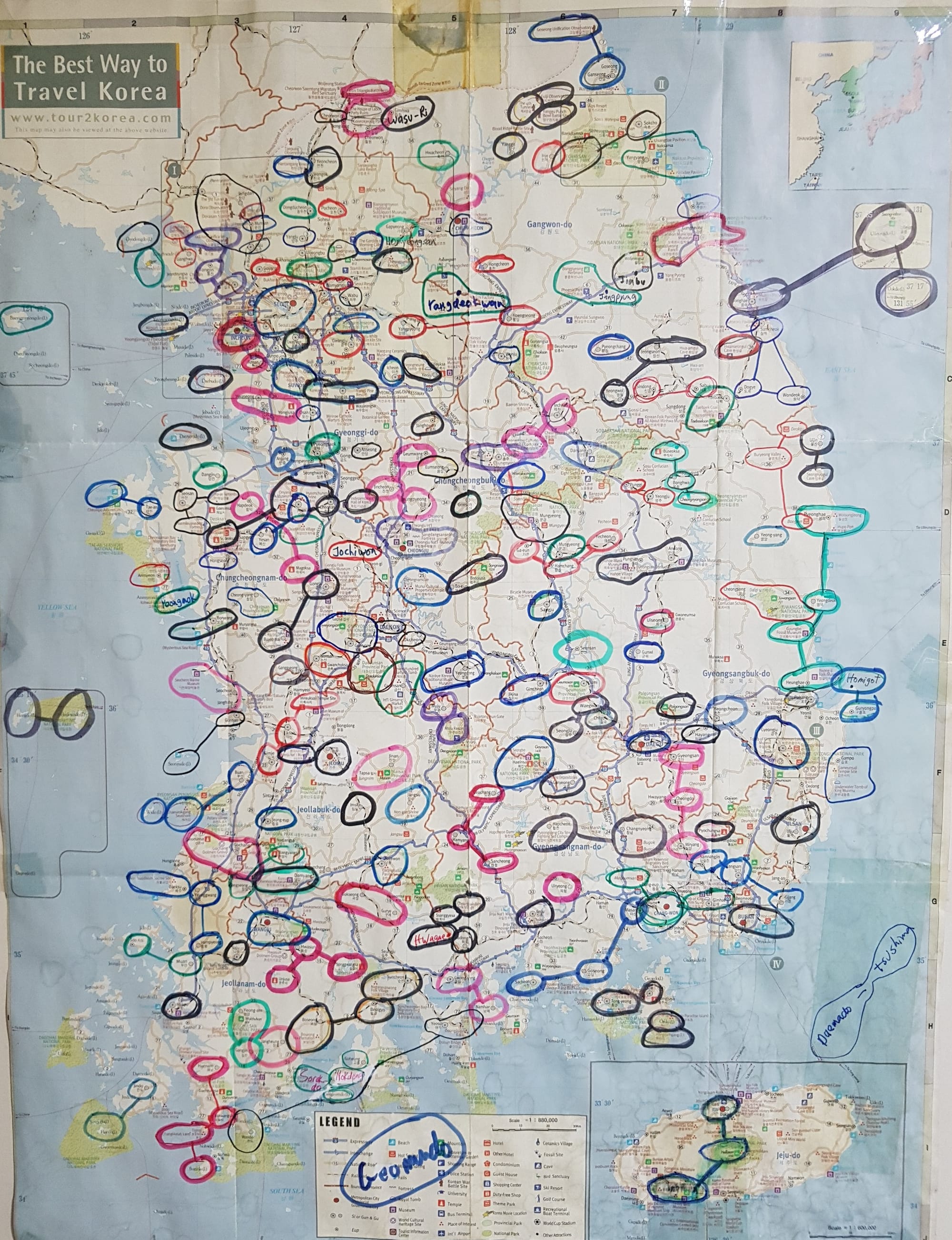
🎤 You have traveled widely within Korea. Is there a place in Korea that feels especially meaningful to you, and why?
Another question I have heard numerous times. Maybe the most peaceful place in the Land of the Morning Calm was the Daehan Green Tea Plantation in Boseong. I was there more than a decade ago, and I still remember it like it was yesterday.